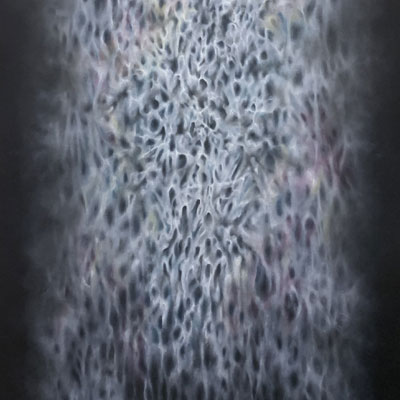


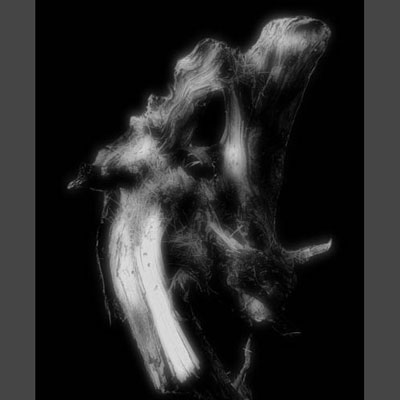
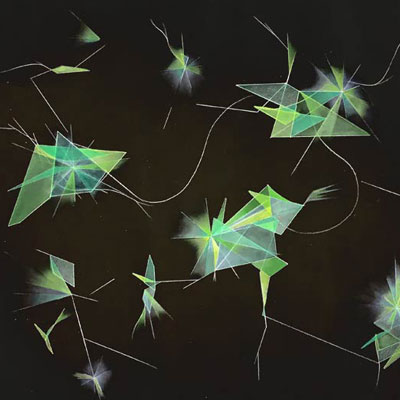
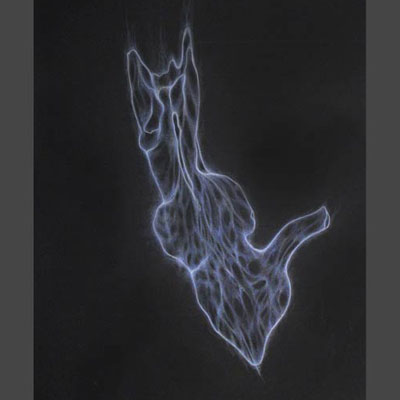
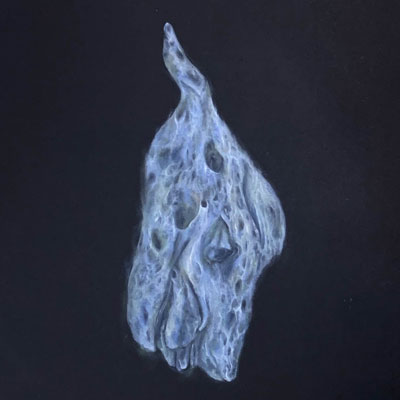
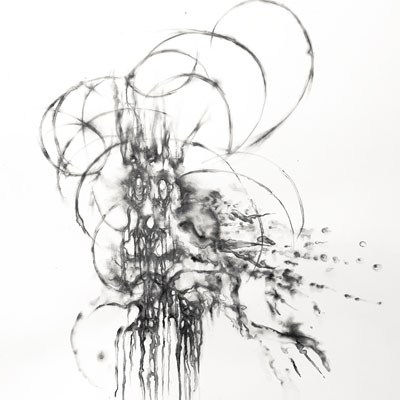
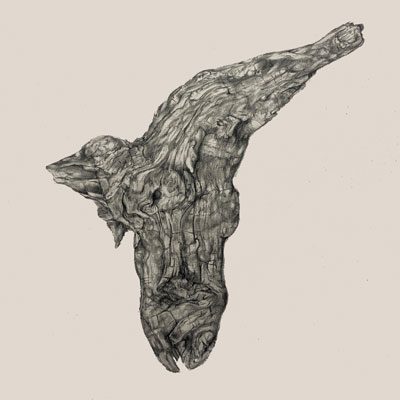
First examples of 'Unified Fields' drawings and paintings
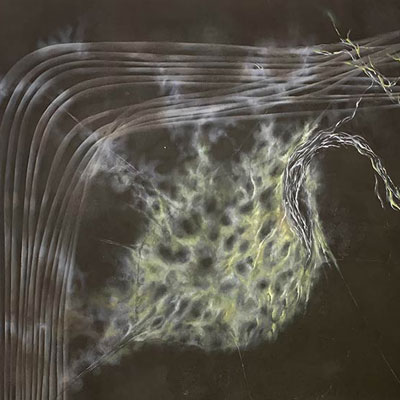
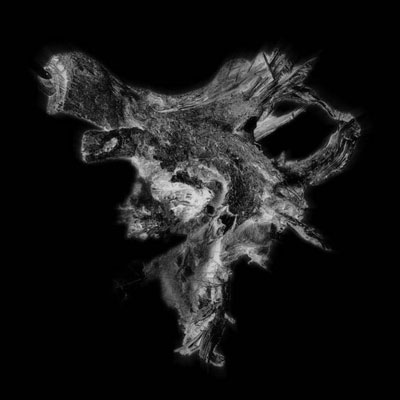
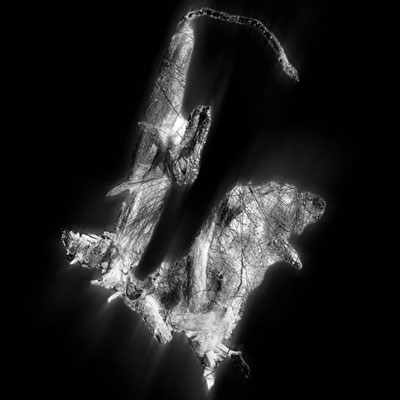
About Unified Fields
Unified Fields is an art-led interdisciplinary research and development project initiated by Esther Rolinson in dialogue with Adam Harris of Millimetre Makes. It brings together artists, scientists and academics to explore how shifting attitudes toward growth, finitude and cyclical systems might reshape human relationships with wider ecologies.
At this critical moment, there is an urgent need to reconsider how we relate to cyclical systems and permanent materials. The project begins with the creation of new artworks alongside experiments in materials development, identifying alternatives to environmentally harmful processes within the creative industries. In parallel with this practical research, Unified Fields fosters philosophical conversation across diverse disciplines and perspectives.
Unified Fields shifts attention away from exponential models of progress and toward cyclical systems of growth, decay and renewal. Drawing on material ethics, spiritual ecology, economic models of sufficiency and ancestral knowledge, it positions artistic research as a catalyst for cultural change and as a meeting ground for multiple ways of knowing.
By holding these diverse perspectives in active dialogue, the project seeks to reframe impermanence — not as loss — but as generative potential.
Biographies
ESTHER ROLINSON (ARTIST)
In 2023 artist Esther Rolinson and creative producer Adam Harris began a conversation around our mental, physical, and emotional resilience in adapting to escalating environmental changes. Their dialogue focuses on the role that creativity can play in supporting our human ability to connect, endure and value change.
Esther Rolinson is an award-winning British multi-media artist working between UK and Italy. Her explorative artworks vary in form from two-dimensional to sculptural and video installations and large scale public works embedded within communities.
Rolinson uses new media technology and architectural materials as well as long-established artistic languages such as drawing and sculpture. All her works have a starting point of drawings made by hand and she construct complex systems and forms to convey powerful sensory experiences. She extends these into three dimensions and programmed light movements in her installations, crossing the borders between digital and analogue to place simple manual processes and advanced digital solutions side by side.
Rolinson's intention is to communicate consciousness through the observation of physical sensation. She boldly addresses universal concepts through deep studio practice. Underpinning her artworks is a call to action to learn about our collective connection and purpose. This query is made from both a systems-based view and a personal reflective process undertaken over thirty years 'to alter the course of my own ancestral river'.
She has worked internationally making permanent and temporary public space commissions as well as exhibiting in gallery, theatre, and museum spaces in solo and group shows. Her works are held in prominent collections such as the Victoria & Albert Museum, and the Computer Art Society, London. She has recently been commissioned to create a major work for a science research building in Cambridge, UK and as lead artist for a new £100M surgical centre in Somerset, enquiring into 'the function of trust in both a care environment and, by extension, our lives'.
ADAM HARRIS (MILLIMETRE)
Adam Harris is a qualified landscape architect to post graduate level, project manager and creative producer creating environmental and architectural works in cultural organisations and throughout the public realm. Trained in both craft and design, fusing artistic sensibility with practical application to deliver ambitious projects that are equally responsive to site conditions and user experience.
Whilst working for Millimetre (an award-winning team of forward-thinking designers and makers), he has worked with leading artists such as Grayson Perry and for world-class designers such as Thomas Heatherwick to create some of the UK's most talked about work. Producing works for institutions such as the V&A, The Museum of London, Somerset House, and the Museum of the City of New York.
His work combines an extensive knowledge of construction techniques and natural processes with community activation and sustainability, crafting spaces that look to make social change. Responding to the climate crisis, to lessen our impact on environmental conditions to achieve carbon net zero and contribute to nature recovery networks.
EDWARD BRIGGS (MILLIMETRE)
Ed Briggs is a multidisciplinary artist and maker interested in interactions between art and science, art as research, science communication and art in non-traditional settings.
His work has been exhibited and performed internationally, working with organisations such as the British Geological Survey, National Environment Research Council, the British Science Festival, and the Space Geodesy Facility at Herstmonceaux.
Ed is involved in a diverse range of art production roles including project management, fundraising, academic writing, public outreach, design and fabrication. He has worked as a technical designer and maker on such notable projects as Kara Walker's Fons Americanus, Semiconductor's Halo, and Katie Patterson's Timepieces.
Grants and awards include a Gulbenkian Foundation grant for artistic creation, the PRS Foundation composer's fund, and Arts Council England project funding. He recently completed a practice based PhD in fine art, with a full scholarship from the Arts and Humanities Research Council, about performing with scientific apparatus.
KEITH LINDSEY (DURHAM UNIVERSITY)
Keith Lindsey is Professor of Plant Molecular Biology at Durham University's Department of Biosciences, with senior management experience. He is a Fellow of the Linnean Society of London and a Fellow of the Royal Society of Biology.
A graduate of Oxford (BA) and Edinburgh (PhD) Universities, he carried out post-doctoral research at Edinburgh University's Department of Botany and at the Department of Biochemistry at Rothamsted Experimental Station. He was appointed to an academic post at the University of Leicester in 1989, before moving to a Chair in Durham in 1996. He has been Head of the School of Biological and Biomedical Sciences at Durham, when he founded the new Integrative Cell Biology Laboratory.
He has worked on a number of UK Government and Scottish Office Committees and Working Groups, and on scientific review panels for a number of overseas institutions. His research interests are in understanding molecular mechanisms of plant development. He has over the years established research collaborations with industry and with several leading laboratories worldwide, including the Salk Institute, the Universities of Gent, Wageningen, Kiel, Bonn, Vienna, Castilla-La Mancha, Salamanca, Perpignan, Umea, Stellenbosch, Western Cape, Fort Hare, Academia Sinica,Taiwan and Huazhong Agricultural University.
MATT WILLSON (INTELLIGENT GELS)
Matt Wilson, director of Intelligent Gels is responsible for creating new and exciting products using nature-based materials from sustainable sources. Spanning a wide range of industry sectors such as Utilities (drinking water/sewer networks), Horticulture, Angling, Food and Beverage.
His portfolio includes:
- A collaboration with Durham University Bioscience Department using hydrogels to grow plants for the horticulture sector and to create gel based solutions that prevent tree root intrusion into the sewer network, and remove a source of blockage without harming the trees.
- Reducing the source of decolourisation (iron deposition) in drinking water pipelines in order to significantly save water use during network maintenance programmes plus we can improve water quality.
- Removing microplastics or 'fake baits', used in Angling, from lakes and rivers and replacing them with biodegradable fish bait.